|
|
|
|
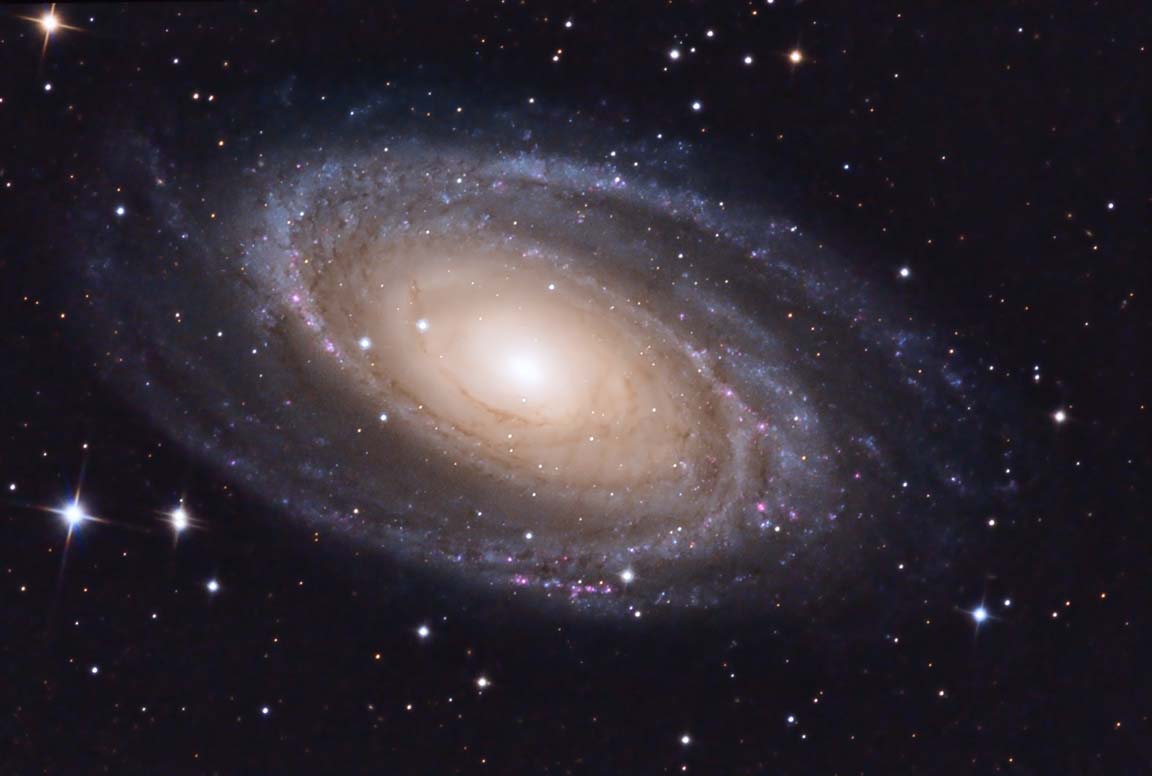 |
| This stunning image of M81 was taken by
David Paul in the UK. David used his 30" dob on a
Dual-axis Platform. The camera was a ZWO 2600. Sub-exposures
were unguided and 12sec long. Total exposure time with
LRGB filters was 32 minutes. |
 |
| This detailed image of M1, the Crab Nebula,
was taken by Johan de Sarcilly of France. He used his
20" f3.3 Arp83 Dobsonian Telescope with Skyvision
optics on one of our Dual-axis Aluminum Platforms. Camera
used was a ZWO ASI533mm, with a Televue Paracorr2. Filters
used were LRVB from Astronomik. An amazing 5400 frames,
each 1/2sec long, were stacked to make this image. Total
exposure time was 1hr 30min. |
|
|
 Dan
Judd recently wrote to send some photos of Mars, Saturn
and Jupiter. Here are his comments: "It has been a while since we have
exchanged emails, and I thought you would enjoy the
attached photos and an update.
I use your platform with my AstroSystems 18" F/4.5
scope. I normally store the scope assembled and ready
to roll out of my telescope shed at a moments notice.
My 16 year old dual axis platform is still working great.
Other than wiping the dust off, the only thing I have
had to do is replace the 12V battery and upgrade to
a smart charger.
I also added a guide scope and camera.
I figured out how to guide using the PHD2 software,
even on the planets. I get a planet centered and ready
to image and then start PHD2. I can then image hands
free. The imaging train for the photos were as follows:
ZWO ASI585MC camera, ZWO Dispersion Corrector, UV/IR
cut filter, 2X barlow spaced to give 2.8X, AstroSystems
18" F/4.5 telescope. This combination gives me
about .1 arc seconds per pixel. No way I could do this
without your platform!"
|
%20cropped.jpg) |
|
This wonderful image of the Hidden Galaxy, IC342 in
a rich star field in Camelopardalis, was taken by David
Paul in the UK with his 30" dob on a Dual-axis
Equatorial Platform. David used a ZWO ASI 6200 PRO camera.
Sub exposures were unguided and 12.1 seconds long using
LGRB filters for a total exposure time of 32 minutes.
|
|
|
| This gorgeous image of NGC
6888, the Crescent Nebula, was taken and processed by
David Paul in the UK. He used his 30" f3.5 Starstructure
Horizon Dob with Mike Lockwood optics. It was mounted
on a Dual-axis Equatorial Platform. Camera used was a
ZWO ASI 6200 PRO. Sub exposures were unguided and 12 sec
long through Ha and OIII filters, with 35 frames for each
filter. The moon was almost full the night the image was
captured. |
 |
This detailed image of M1
was taken by David Paul in the UK.
The telescope is a 30’’ F3.5 Starstructure Horizon
Scope with Mike Lockwood optics. It was mounted on a Dual-axis
Equatorial Platform. Camera is a CMOS ZWO ASI 2000 Mono
with LRGB Filters and a Paracorr Type 2 Coma Corrector.
Each frame was 12.1 seconds with 2x2 binning, gain
104, offset 110 with total of 100 captures (just over
20 minutes total duration). No autoguiding was used.
All image processing was done via Pixinsight.
|
%20slight%20crop.jpg) |
| This wonderful image of NGC
6946 (the Firework Galaxy) was taken and processed by
David Paul in the UK with his 30" Dobsonian telescope
mounted on a Dual-axis Aluminum Platform. The image was
taken with LRGB filters and 10 seconds frames (2x2 binning),
with NO autoguiding. Overall the total number of frames
was 119 so that’s just under 20 minutes exposure.
Camera used was an Atik Horizon CMOS. |
|
|
|
|
| A remarkable photo of the Pillars of Creation.
Taken by Mirko Maher and Jon Schwartz with a 28"
SlipStream alt/az GoTo Telescope made by Equatorial
Platforms. Total exposure was 20 minutes, with 10 second
unguided subs. Camera used was a zwo asi 071MC PRO ASI
071 Pro. |
|
|
| The Bubble Nebula. Taken with a 30"
dob on a Dual-axis Equatorial Platform. 25 exposures
with both HA and OIII narrow band filters were used.
Each exposure was 12 seconds, unguided, for a total
exposure time of 10 minutes. Image acquisition and all
processing by David Paul at his home observatory in
the UK. |
|
|
This stunning portrait of M13 was taken
by David Paul in the UK. He used his 30" f3.5 StarStructure
Horizon telescope, equipped with optics from Mike Lockwood.
The telescope was mounted on his Dual-axis Aluminum
Equatorial Platform. The LRGB image was shot with an
Atik Horizon Mono camera. 24 Luminance unguided exposures
of 15 seconds and 10 exposures for each of the RGB channels,
for a total exposure time of 13.5 minutes. 2x2 binning
at the lowest gain. Processing was done with Pixinsight
software.
|
|
|
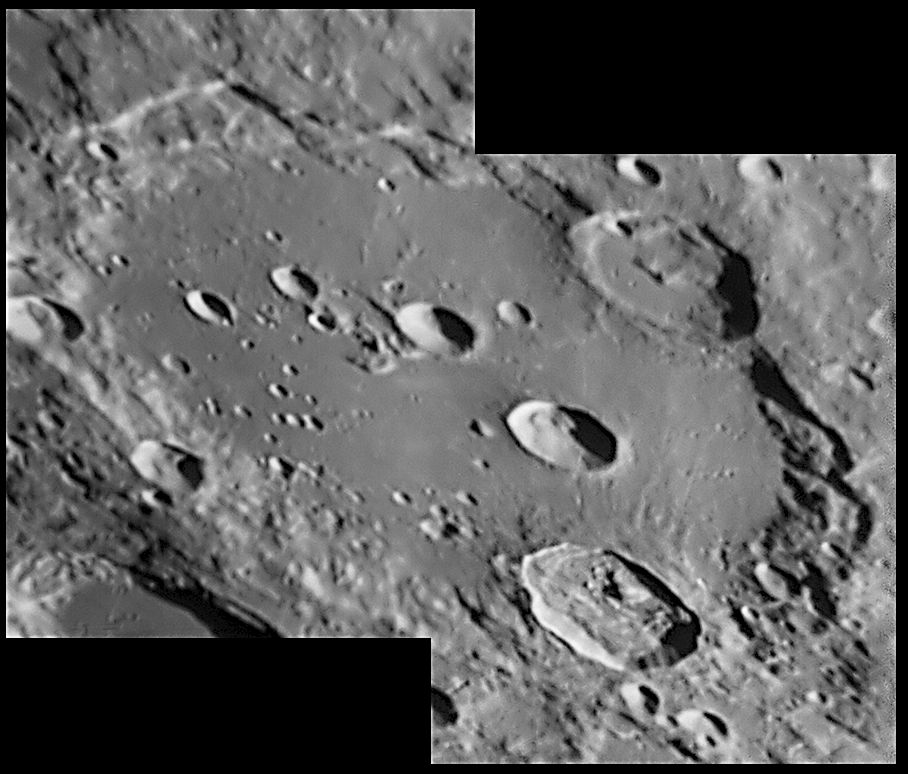
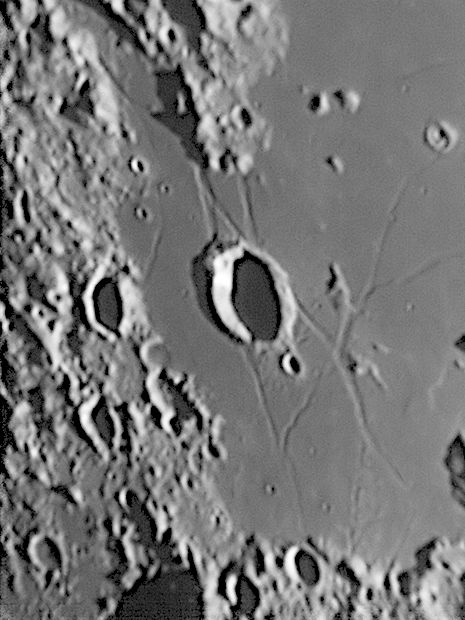
| This amazingly detailed image of the
Alpine Valley and Plato was captured by Olivier Bonnavaud
in France. Note the clear rille running up the Alpine
Valley and the numerous small craters on Plato's floor.
Here are the specs for the photo from Mr. Bonnavaud:
"For Alpine Valley image: taken from my home
in Paris neighborhood 24 February 2018 on my Dobson
Explore Scientific 400 , Barlow APM 2.7, ADC (Atmospheric
Dispersion Corrector), Filter Ir742, caméra
QHYIII 224C (stacking of best 1000 pics of 2ms). Software
: AS3, Dstation and Astra Image for sharpening."
To see many more of Mr. Bonnavaud's remarkable images,
both of solar system objects and of deep sky objects,
visit this page: https://drive.google.com/drive/folders/1hhTRbtOIg5Fj_8LnIXacs_-H-aE4ZMUC
|
|
|
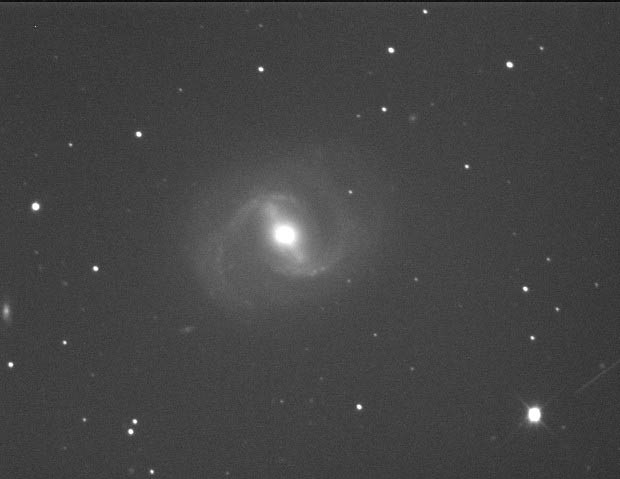
NGC 1365 in Fornax. Image by Paul Hatchman
in Australia. Here are Paul's notes about the image:
Camera is a ZWO ASI294MC
Stack of 411 x 4s subs = 27 mins
Captured with Sharpcap and processed in Pixinsight.
Taken from my home under Bortle 7 skies.
And of course using my stunning 20" f3.74 Spica
Eyes telescope on a Dual-axis Aluminum Equatorial Platform. |
|
|
| A splendid image of M8, the Lagoon Nebula,
taken on July 12, 2018 by Marcus Hagi in Switzerland.
A Baader-modified Canon EOS 450D Camera was used. Exposure
time 1 hour 9 minutes, consisting of 23 three-minute
exposures at ISO 800 with a 16” f/4.5 dobsonian
on a Dual-axis Aluminum Platform. Many more of Marcus's
wonderful Platform photos can be seen here. |
|
|
|
NGC 4631. This haunting image was taken by David
Paul in England. He used a 30" Starstructure
Horizon telescope with Lockwood optics. This scope
was mounted on a Dual-axis Aluminum Platform, and
all frames were unguided. An Atik Horizon (mono) CMOS
camera was used with LRGB filters. Each filter was
20 frames (15 seconds each, unguided) processed using
Pixinsight software.
|
|
|
|
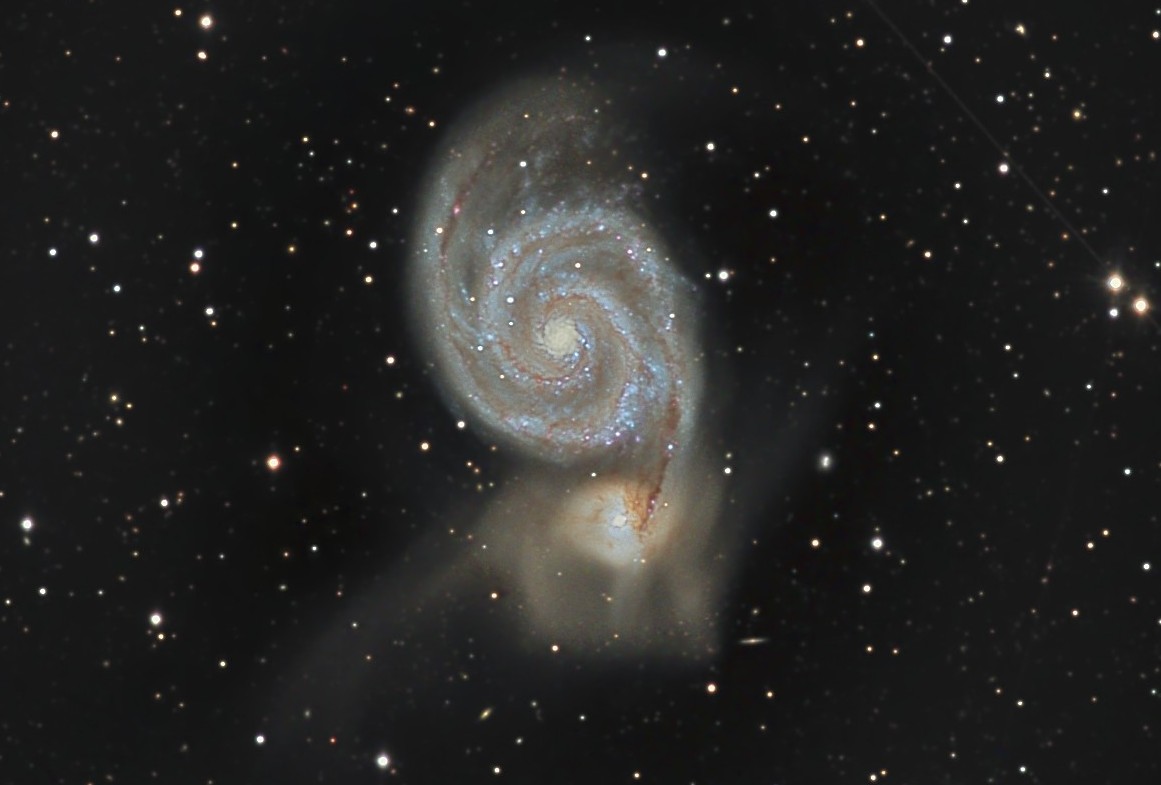
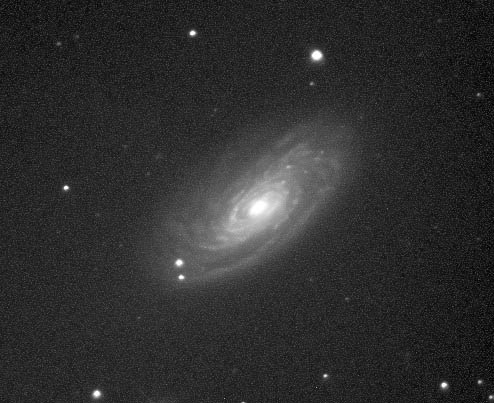
This beautiful detailed image of M81 was
taken by David Paul in England. He used a
30" Starstructure Horizon telescope with
Lockwood optics. This scope was mounted on
a Dual-axis Aluminum Platform, and all frames
were unguided. An Atik Horizon (mono) CMOS
camera was used with LRGB filters. Each filter
was 20 frames (15 seconds each) processed
using Pixinsight software.
|
|
|
|
This gloriously detailed image of M51 was
taken by David Paul in England. He used a
30" Starstructure Horizon telescope with
Lockwood optics. This scope was mounted on
a Dual-axis Aluminum Platform, and all frames
were unguided. An Atik Horizon (mono) CMOS
camera was used with LRGB filters. Each filter
was 20 frames (15 seconds each) processed
using Pixinsight software.
|

|
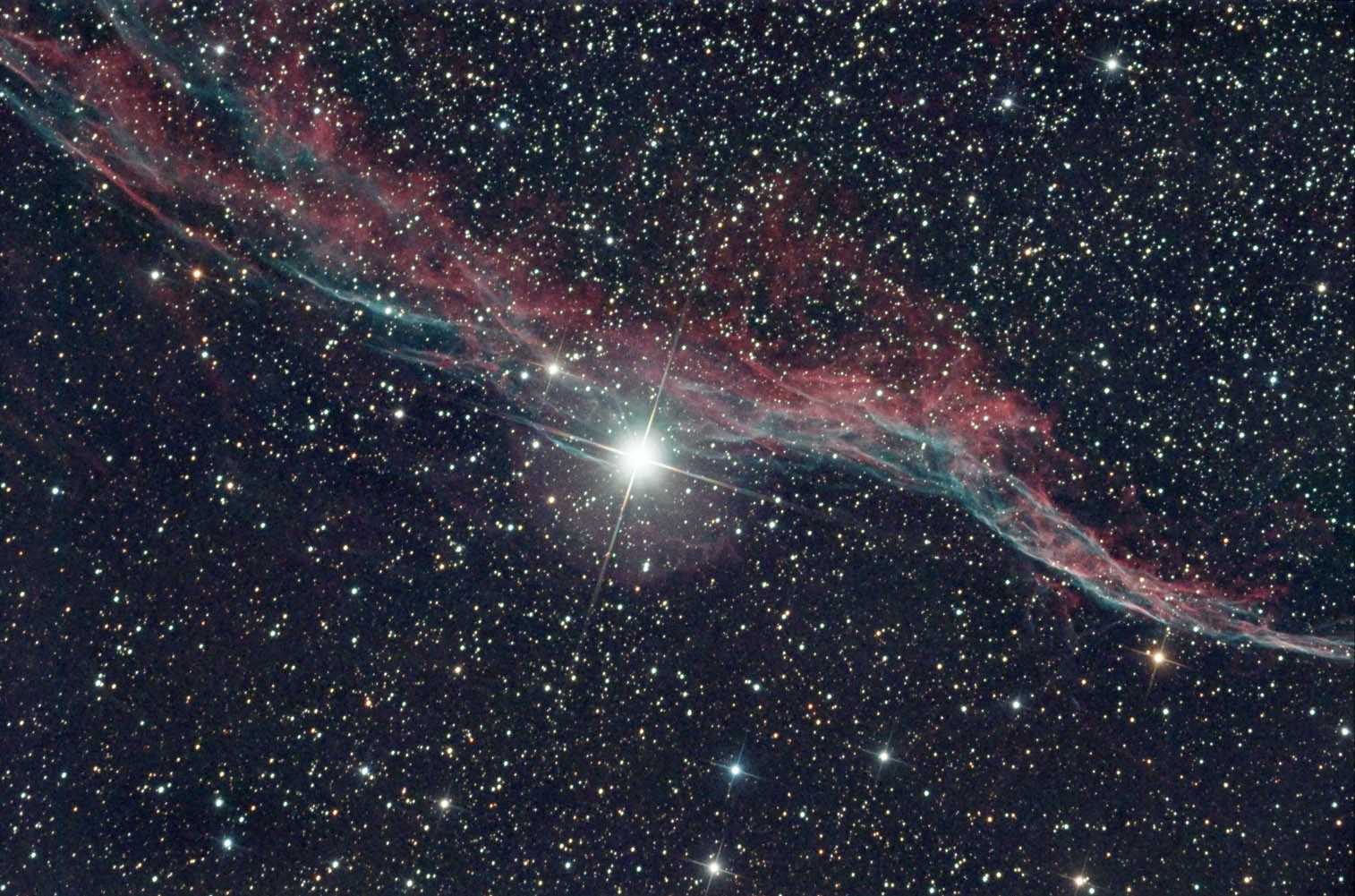
NGC6960, the Veil Nebula -- taken with
an Explore Scientific 16" Dobsonian on a Dual-axis
Aluminum Platform,, ASI1600MCC at -15°C, IDAS LPSV4
filter, no coma corrector. Click for full resolution
image.
Registration : Registax5, processed using Pixinsight.
This is a stack of 170 five second exposures. Image
by Olivier Bonnaveau of France. |
 |
|
M20, the Trifid -- taken with an Explore Scientific
16" Dobsonian on a Dual-axis Aluminum Platform,
ASI1600MCC at -15°C, IDAS LPSV4 filter, no coma
corrector. Click for full resolution image.
Registration : Registax5, processed using Pixinsight.
This is a stack of 630 three second exposures. Image
by Olivier Bonnaveau of France.
|
|
|
| NGC 891 is a spiral galaxy seen edge-on
in the constellation Andromeda, some 30 million light
years from Earth. A dark dust lane can be seen across
the whole length of the galaxy. 23 three-minute exposures
at ISO 800 were combined for this image with DeepSkyStacker
software, resulting in an 69 minute exposure (taken
through a 16” f/4.5 reflector “Ninja”
on a dual-axis aluminum equatorial platform, camera:
Baader-modified Canon 450D, coma corrector: TeleVue
Paracorr Type II, guiding: Lacerta off-axis system,
Lacerta MGEN autoguider). Image processing was done
in Photoshop. Photo by Marcus Hagi in Switzerland. |
 |
|
Messier 1, the famous Crab Nebula, is a supernova
remnant 6500 light years from Earth. It is the result
of a supernova explosion which was observed by Chinese
astronomers in 1054. The “guest star” was
visible during daylight for three weeks. 24 three-minute
exposures at ISO 800 were combined (totaling 72 minutes)
with DeepSkyStacker software and further processed
in Photoshop. Telescope: 16” f/4.5 reflector
“Ninja” on a dual-axis aluminum equatorial
platform. Camera: Baader-modified Canon 450D camera.
Coma Corrector: TeleVue Paracorr Type II. Guiding:
Lacerta off-axis system, Lacerta MGEN autoguider.
Photo by Marcus Hagi in Switzerland.
A description of how Marcus uses his Platform for
this imaging, as well as links to more of his work
with his Platform can be found at: http://www.utopia-photography.ch/telescopes/osypowski.html.
|
|
|
|
Javier Beltran Jovani has done it again
-- another stunning planetary image, this
one of Mars, taken with his 20" telescope
on a Dual-axis Equatorial Platform.
|
|
|
|
Markus Hagi of Switzerland took this
marvelous picture of M81 in Ursa Major.
Here are his comments:
"I’ve had two wonderful nights
with your extraordinary platform –
everything was working like a Swiss
watch.
This image of M81 was taken on February
25 /26, 2014 through the 16 inch f/4.5
dobsonian telescope “Ninja”
on a Dual-axis Aluminium Platform. 20
images of approximately 3 minutes exposure
time at ISO 800 taken with a Baader-modified
Canon EOS 450D camera were combined
with the DeepSkyStacker software and
further processed in Adobe Photoshop
CS3. Total exposure time amounts to
one hour and 5 minutes and no dark frames
were taken. Guiding was done with a
Lacerta MGEN autoguider and a Paracorr
Type II coma corrector was used."
More of Markus' pictures taken with
his Platform can be seen on these two
websites: here
and here.
You can also read about his procedures
for using his Platform for imaging at
this
site.
|
|
|
|
|
Nineteen exposures of approximately
3 minutes were added for this Messier
20 image, totaling 1 hour and 2 minutes
of exposure time. The image was taken
on July 12 / 13, 2013 through a 16”
f/4.5 “Ninja” dobsonian telescope
sitting on an Aluminum Dual-axis Platform
with a Paracorr Type II corrector, a
Lacerta MGen autoguider and a Lacerta
off-axis system. The camera, a Baader
modified Canon 450D, was used at ISO
800 with no in-camera noise reduction.
Stacking was done with the DeepSkyStacker
software (with no dark frames used)
and further image processing was done
in Photoshop. Image by Marcus Hagi of
Switzerland.
|
|
|
|
M 51 taken by Yann Le Gall of France
using his 15" Dob on a Dual-axis
Aluminum Platform. Yann autoguided a
batch of photos, each 4 minutes long,
and then stacked them to create this
remarkeably deep image of the famous
galaxy. Yann comments that "the
Equatorial Platform autoguides very
well!" The total exposures were:
Luminance 184min (46X4min)
Red 24min (6X4min)
Green 20min (5X4min)
Blue 24min (6X4min)
|
|
|
|
Saturn taken on May 24th 2012 by Marc
Delcroix in France.
Equipment used was a Dobson SkyVision
318mm on Dual-Axis Equatorial Platform,
a powermate x5, an ASH Atmospheric Dispersion
Corrector, LRVB Astronomik and R+IR
Baader filters, and a Basler acA640-100gm
camera. Mr. Delcroix explains:
"Despite the low altitude - Saturn
is culminating at 40° this year
from my observation location, I could
take a good image of the planet thanks
to a Atmospheric Dispersion Corrector.
LRGB Saturn has been processed with
Avistack, Iris and Photoshop."
|
|
|
|
Mars taken by Javier Beltran Jovani
in Spain on February 27, 2012. Javier
used an 18" Dob on his Dual-axis
Equatorial Platform to capture this
image.
|
|
|
|
Jupiter taken with a
16" Dobsonian Telescope
on a Dual-axis Aluminum
Platform. Image by Rik
ter Horst and Emil Kraaikamp
in the Netherlands. Here
are Rik's comments:
"The camera we used
is a Basler Ace acA640-100gm
and the effective focal
ratio was F/28.5. Date:
October the first, around
23:53h (UTC). Image was
taken during very good
but foggy conditions.
We constantly had to use
a hair dryer (in fact
it was a paint stripper!)
to keep the optics free
from moisture."
|
|
 |
|
Markus Hagi in Switzerland took this
photo of planetary nebula NGC 6905 using
his "marvelous, fabulous, remarkable
Dual-axis Aluminum Platform." Here
are the details of how the photo was
produced:
" Taken through a 16" f/5
Martini Dobson with Zambuto mirror on
a Dual-axis Aluminum Platform (Canon
20Da, TS off-axis system, Paracorr Coma
Corrector, Lacerta MGEN guider). The
image is a combination of three images
with 8 minutes exposure each (with dark
frame subtraction done by the camera).
The three images were put in different
layers of the same Photoshop file, the
first having 100% opacity, the second
having 50% opacity and the third with
33% opacity (layer mode “normal”).
The layers were flattened and some work
on the curves was done."
|
|
|
|
|
Javier Beltran Jovani of Spain has been doing cutting
edge planetary imaging for years with his 18"
Obsession on one of our Dual-axis Platforms. This
is one of his latest images of Jupiter, showing Ganymede
close to Jupiter and ready to go behind the planet.
Note the amazing detail, not only on Jupiter itself,
but also on Ganymede.
For a special treat, here
is an animated gif showing the moon moving behind
the planet.
|
|
|
| This beautiful portrait of M65 and
M66 was shot by Markus Hagi in Switzerland with
his new Dual-axis Aluminum Platform, using a 16"
f5 Martini Dobson with a Zambuto mirror. Equipment
used were a Canon 20Da, a TS off-axis system, a
Paracorr Coma Corrector, and a Lacerta MGEN guider.
The image is a combination of three images with
5, 6 and 8 minutes exposure times.
For processing, Mr. Hagi says, "I put them
in different layers of the same Photoshop file,
the first having 100% opacity, the second having
50% opacity and the third with 33% opacity, flattened
the image and did some work on the curves. I then
put a fourth image with 2 minutes exposure time
on top of it with a layer mask (masking out all
parts of this image except the center of the galaxies)."
This is Mr. Hagi's first photo taken with his
new Equatorial Platform, using an autoguider.
|

Javier Beltran Jovani has just obtained
another of his excellent planetary photos, this one of Saturn
showing the persistent storm raging on its surface. For
other photos Mr Jovani has taken, see his large gallery
at: http://www.flickr.com/photos/javier_beltran/

More amazing planetary photos by Javier
Jovani, taken with his Platform, can be seen at this website:
http://www.flickr.com/photos/javier_beltran/
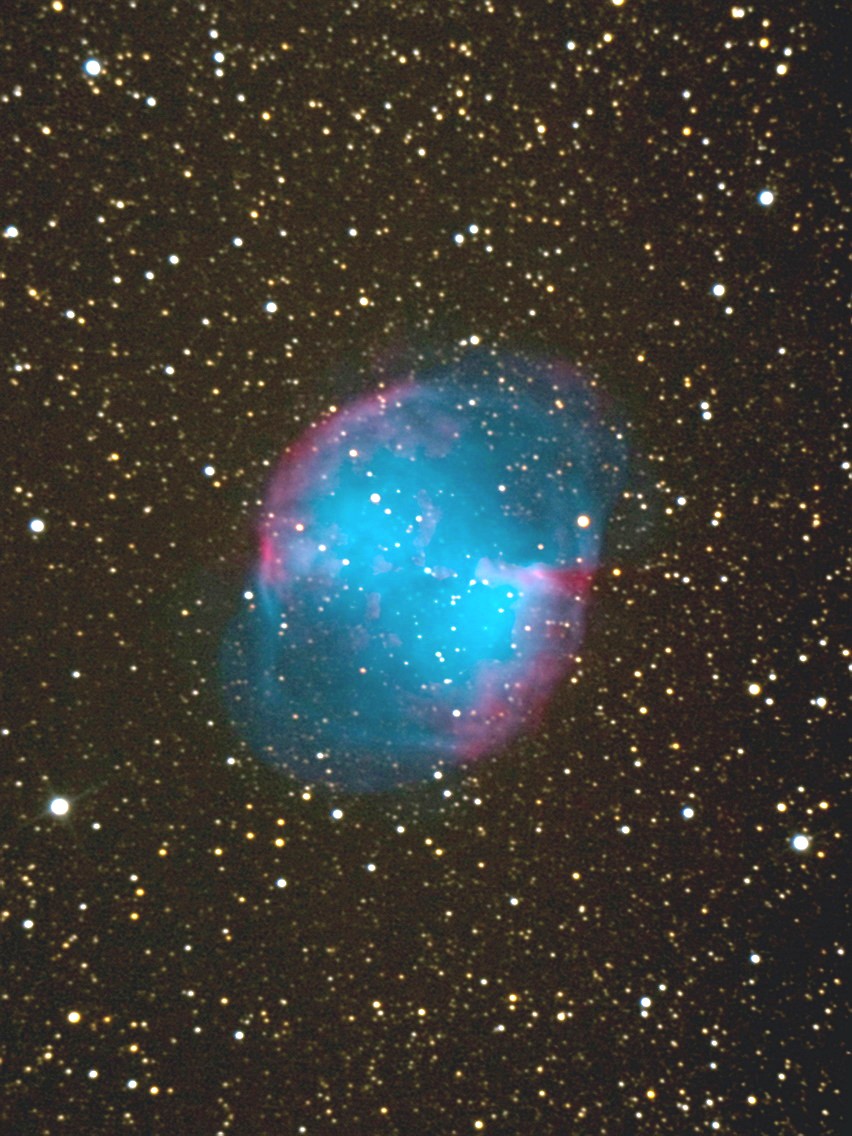
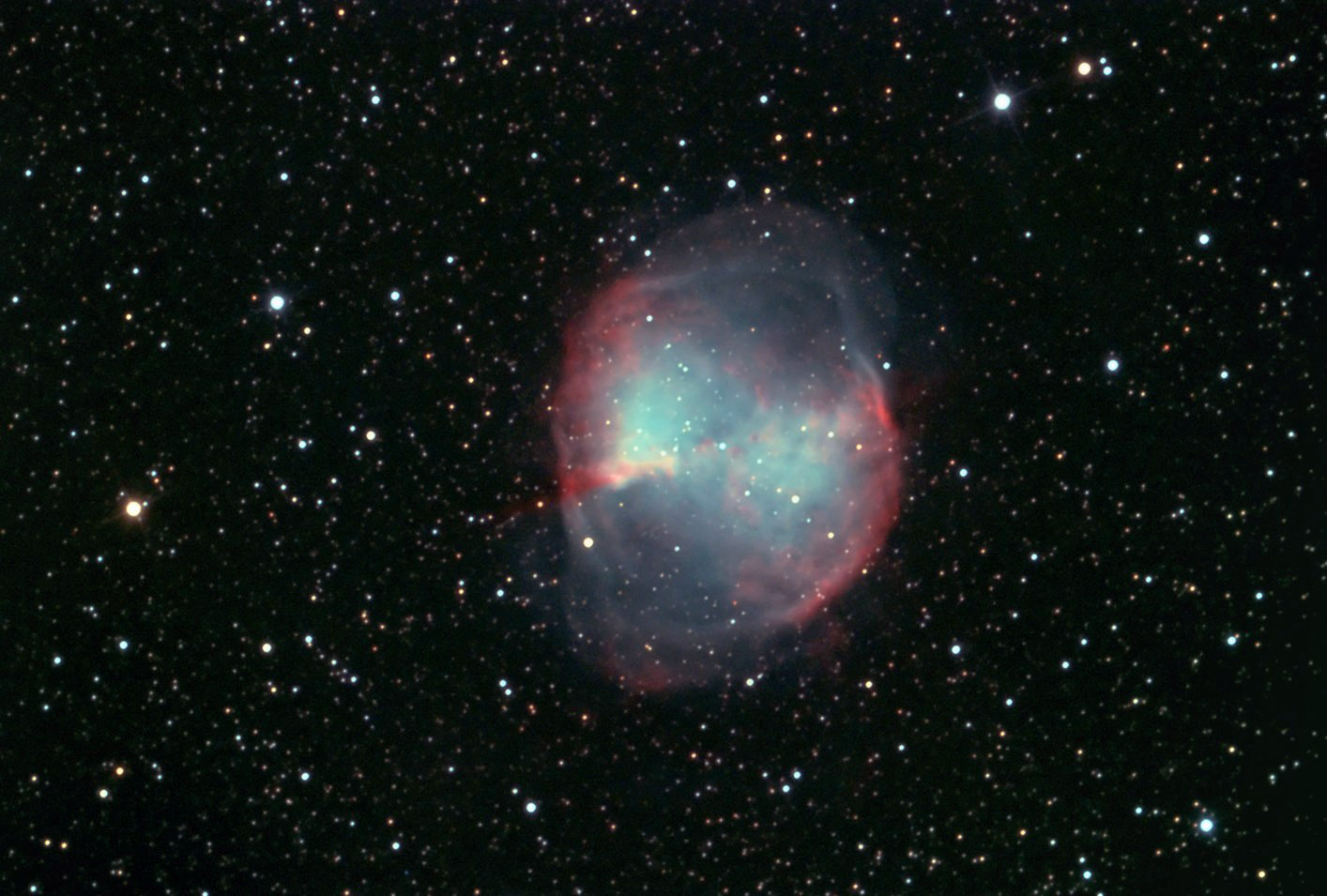
The Dumbell Nebula (M27) and Ring Nebula (M57)
Images by Bob Brunck
Date and Location: August 9, 2007 from Soap Creek
Valley, at Corvallis, Oregon
Imaging Scope: Obsession 25" f/5 on a Tom
Osypowski Dual Axis Aluminum Equatorial Platform
Guide Scope: Orion 8" f/4 with a 2x Barlow
Autoguider: Phillips ToUcam Pro II, Shoestring
Astronomy GPUSB guideport adapter, and PHD guiding
software
Camera: Canon EOS 10D at prime focus with a Lumicon
minus-violet filter (keeps out dust and moisture)
Exposures for M57: 9 x 120 sec at ISO 800, 3 x
120 sec Darks
Exposures for M27: 6 x 120 sec plus 3 x 180 sec
at ISO 800, 3 x 120 sec Darks and 3 x 180s Darks
Processing: Raw files converted with Photoshop
CS3 to 16bit TIFs. Calibrated, aligned, and combined
in Images Plus. Final color and luminance adjusted
in ACDSee. The original 3036 x 2024 pixel image
was resized to 67% and a 1024 x 768 crop taken
for the final image.
|
|
|
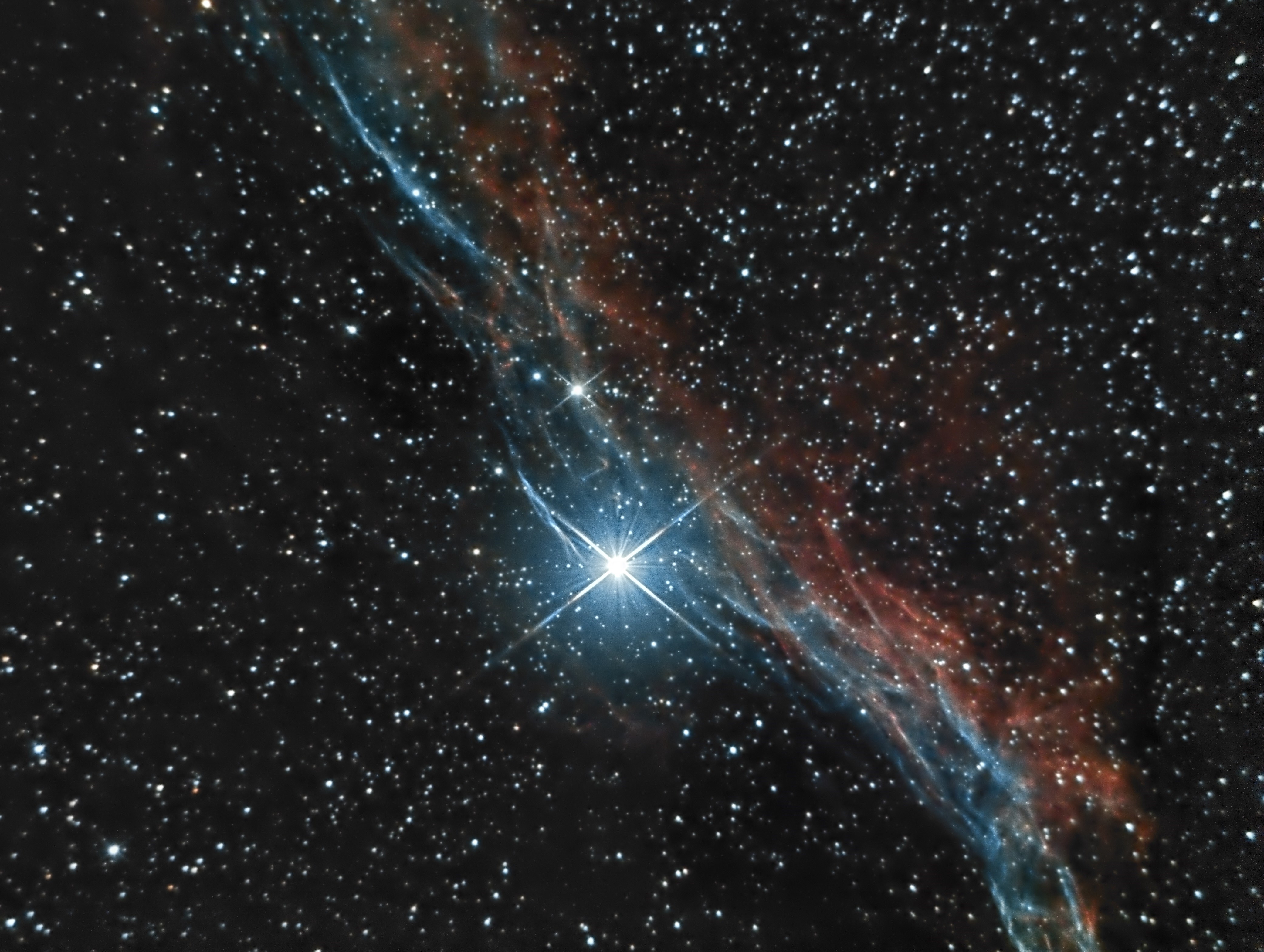
Description:
Picture
taken by Bob Brunck
The Veil Nebula
This portion of the Veil is designated as
NGC 6960
It is also known as the Witch's Broom
The bright star is 52 Cygni
Constellation: Cygnus
Distance: 1400 to 2600 light years (the
distance is not known accurately)
09-11-2010
Imaged at Soap Creek Valley
Corvallis, Oregon
12.5" f/4.8 with Lightholder primary
CCD Labs Q453 (QHY8) Camera with Televue
Photo Paracorr and Hutech IDAS LPS-P2 filter
3 x 300 sec plus 1 x 480 sec subframes acquired
with Nebulosity 2.2.1 with Offset 90 and
Gain 21 (33%)
It was cool and damp out (46oF) with dew
forming everywhere
Tom Osypowski Dual Axis Aluminum Equatorial
Platform
Autoguided with PHD software
8" f/4 Guidescope
CCD-Labs Q-guide camera with Televue Paracorr
Image processing with ImagesPlus 3.75, PixInsight,
and Photoshop CS4
|
|
|
|
Description:
Picture
taken by Glen Schaeffer
NGC 7635, also called the Bubble Nebula, is
an emission nebula in the constellation Cassiopeia.
It is positioned close to the open cluster
M52. The "bubble" is created by
the stellar wind from a massive hot 8.7 magnitude
young central star.
Even with my 20" scope in dark skies,
visually this is a very challenging object.
Photographic Details:
Date & Location: October 16th, 2009,
Fort Mckavett, Texas.
Scope: Obsession 20” f/5 on a Tom Osypowski
Dual Axis Equatorial Platform, Orion 100mm
f/6 Guidescope.
Autoguider: Orion Starshoot Autoguider and
PHD Guider software.
Camera: Canon XS DSLR (self-modified), Canon's
own capture software.
Filters: None
Conditions: Temp 55F, Humidity 82%, Winds
calm, Transparency 8/10, Seeing 7/10.
Exposures: 16 x 120sec @ 1600 ISO Sub Frames,
9 Darks average combined for master dark.
Post-processing: 3904x2900 Raw files converted
to Lossless 16-bit FITS, calibrated, aligned,
and combined with ImagePlus 3.75. Final processing
Adobe Photoshop CS.
|
|
|
|
|
Description:
Picture
taken by Swiss astrophotographer, Martin Mutti
Galaxy M33 in the constellation Triangulum
Date & location: September 30th 2009 Gurnigel,
Switzerland
Conditions: Temp 53F, Humidity 70%, Wind 0
mph
Transparency 8/10, Seeing 8/10
Scope:
12.5'' Dobson f/4.5 "Ninja"
http://www.aokswiss.ch/d/tel/spiegelteleskope/dobs/ninja320/ninja320.html
Mount: Dual-axis Aluminum Platform by Equatorial
Platforms.
Camera:
Canon EOS5d, IR-Filter modified by Baader
Planetarium
Baader Coma Corrector
Autoguiding:
SBIG ST-4
Guiding scope: 2.5'' f/13 with a 2x Barlow
Exposures:
10 x 5min @ 800 ISO, 14 Darks, 12 Flats
Processing:
Pre-processing: Fitswork http://freenet-homepage.de/JDierks/softw_en.htm
Post-processing: Photoshop CS4
|
|
|
|
|
Description:
M27 - The
Dumbbell Nebula
Planetary Nebula
Constellation: Vulpecula
Distance: 1250 ly
Link
to more information
08-23-2009
Imaged at Soap Creek Valley
Corvallis, Oregon
25" f/5 with Nova primary
CCD Labs Q453 (QHY8) Camera with Televue Photo Paracorr
and Hutech IDAS LPS-P2 filter
8 x 120 sec subframes acquired with Nebulosity 2.0
with Offset 90 and Gain 19 (30%)
It was cool (49oF)
Tom Osypowski Dual Axis Aluminum Eq. Platform
Autoguided with PHD sofware
8" f/4 Guidescope
CCD-Labs Q-guide camera with Televue Paracorr
Image processing with ImagesPlus 3.75, PixInsight,
and Photoshop CS4
Images
Copyright by Bob Brunck
|
|
|
|
This image of M42 was taken by
Bob Brunck with a 12.5" f/4.8
Dob on a Dual-axis Aluminum Platform
with a Canon 40D (un-modded) and a
Televue photo Paracorr, at ISO 800.
It is the combination of 6 x 10s,
6x30s, 6 x 60s, and 6x 120s image
frames processed in ImagesPlus and
Photoshop CS4. The exposures were
autoguided with a piggy-backed 8"
reflector.
|
|
|
|
|
|
M104 by Glenn
Schaeffer
Date and Location: April 4th, 2008, Fort Mckavett, Texas.
Scope: Obsession 20? f/5 on a Tom Osypowski Dual Axis
Equatorial Platform, Orion 100mm f/6 Guidescope.
Autoguider: SC1 Mod Celestron Neximage Cam, Shoestring
GPUSB guide port interface adapter, and Guidemaster
software.
Camera: Canon 20D DSLR (non-modded), homemade serial
control shutter release cable, and DSLR Shutter from
Stark Labs.
Conditions: Temp 49F, Humidity 29%, Winds calm, Transparency
9/10, Seeing 7/10.
Exposures: 64 x 60sec @ 3200 ISO Sub Frames, 10 Darks
average combined for master dark.
Post-processing: 3504x2336 Raw files converted to Lossless
16-bit FITS, calibrated, aligned, and combined with
ImagePlus. Final processing PhotoImpact Pro
|
|
|
Henrik Bondo is an amateur astronomer in Denmark
who specializes in lunar photography. He recently received
a new Dual-axis Aluminum Platform for his 20" Obsession,
and has sent some "First Moonlight" pictures
taken with the scope on his new Platform. Mr. Bondo's
interesting website is at:
http://inet.uni2.dk/~d120588/henrik/FirstMoonlight.html
|
|
|
| A
mosaic of ten images taken with a 20" Obsession Telescope
on a Dual-axis Aluminum Platform. Click on the image to
see the remarkably detailed full shot. |
Deslandres
region of the moon photographed on subsequent nights.
|
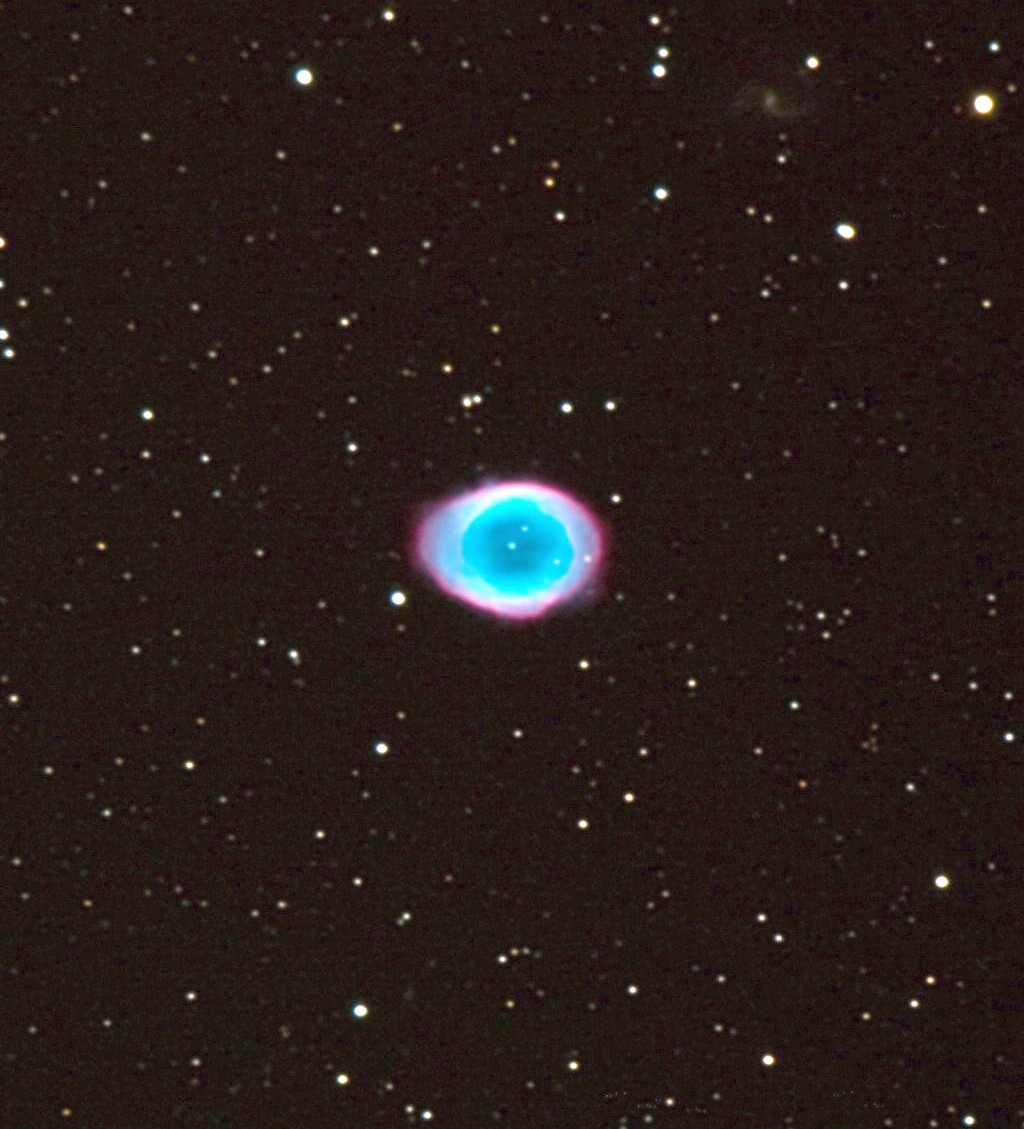
The Dumbell Nebula (M27) and Ring Nebula (M57)
Images by Bob Brunck
Date and Location: August 9, 2007 from Soap Creek Valley,
at Corvallis, Oregon
Imaging Scope: Obsession 25" f/5 on a Tom Osypowski Dual
Axis Aluminum Equatorial Platform
Guide Scope: Orion 8" f/4 with a 2x Barlow
Autoguider: Phillips ToUcam Pro II, Shoestring Astronomy GPUSB
guideport adapter, and PHD guiding software
Camera: Canon EOS 10D at prime focus with a Lumicon minus-violet
filter (keeps out dust and moisture)
Exposures for M57: 9 x 120 sec at ISO 800, 3 x 120 sec Darks
Exposures for M27: 6 x 120 sec plus 3 x 180 sec at ISO 800,
3 x 120 sec Darks and 3 x 180s Darks
Processing: Raw files converted with Photoshop CS3 to 16bit
TIFs. Calibrated, aligned, and combined in Images Plus. Final
color and luminance adjusted in ACDSee. The original 3036
x 2024 pixel image was resized to 67% and a 1024 x 768 crop
taken for the final image.
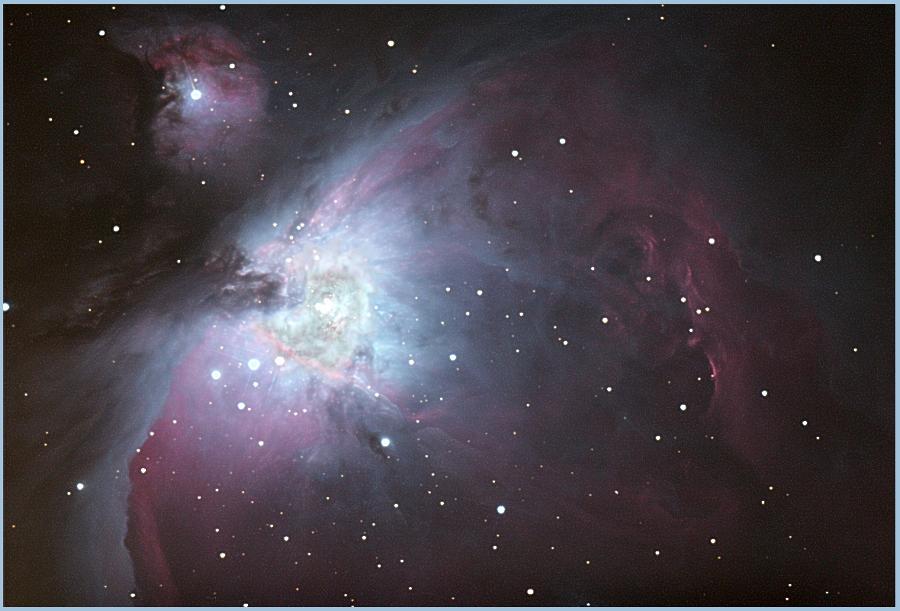
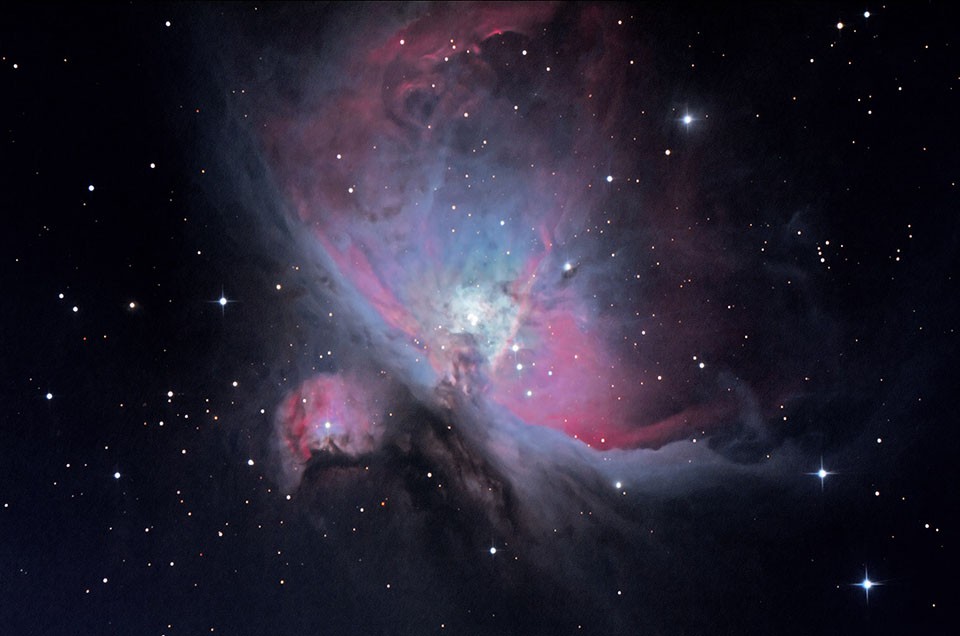
The Great Orion
Nebula is the brightest nebula visible to the naked eye,
forming the middle part of the Hunter's sword in the famous
constellation Orion. It is a breathtaking view in dark
skies with my 20" Obsession where tendrils of gas
can be appreciated. This is my “second light”
with my Canon 20D and scope setup. I wanted to practice
my imaging and processing techniques with an easy and
bright target. The objective of this shot was to observe
different ISO settings and the amount of noise from each.
Because no flats or darks were taken and short shutter
times, graininess was observed in the darker areas around
corners of image. This shot shows the approximate FOV
that my camera/scope has at f/5. Image by Glenn Schaeffer.
Photographic Details:Date: January 30th 2006
Scope: Obsession 20” f/5 on a Tom Osypowski Dual
Axis Equatorial Platform, Orion 100mm f/6 Guidescope
Autoguider: SC1 Mod Celestron Neximage Cam, Shoestring
GPINT-PT guide port interface adapter, and Guidedog software
Camera: Canon 20D DSLR (unmodded), homemade serial control
shutter release cable, and DSLRControl remote shutter
software
Filters: None
Conditions: Temp 48F, Humidity 51%, Winds Calm, Transparency
7/10, Seeing 6/10
Exposures: 20 x 10sec @ 800 ISO, 18 x 10sec @ 1600 ISO,
& 16 x 20sec @ 3200 ISO (no flats or darks)
Post-processing: 3504x2336 Raw files converted and resized
1200x800 (non-linear) using Canon’s Digital Photo
Professional. Aligned, optimized, stacked, and stretched
with Registax 3. Slight use of Wavlet filtering in Registax
as well as color balancing with the Histogram function.
ISO 800 & 1600 used for core region. Final processing
in Photoimpact SE

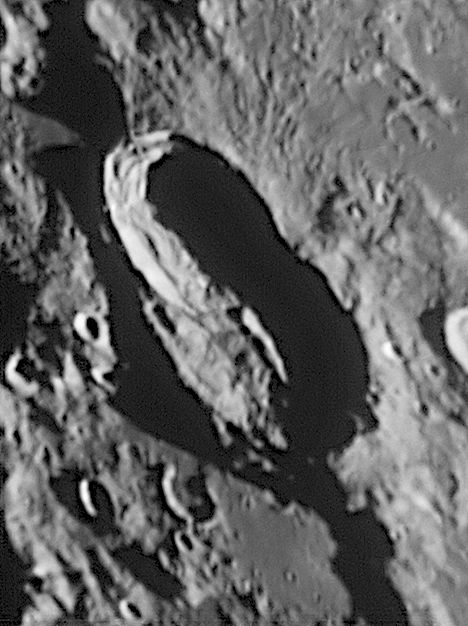
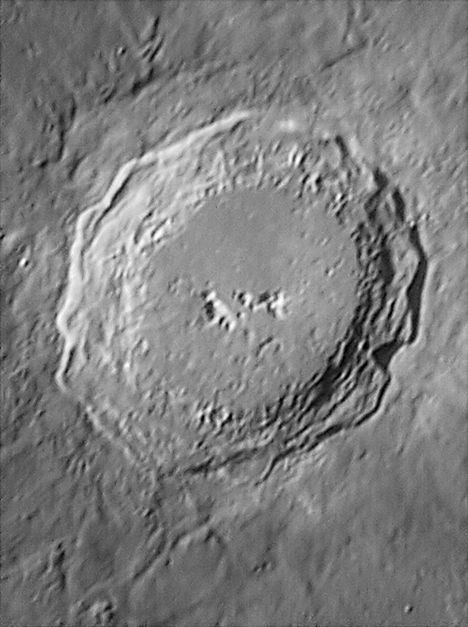
Moon images take by Robert Schulz of Austria with a 12.5"
Portaball Telescope on a Dual-axis Platform.
Click images to view full size.
|
|
|
|
|
Kopernikus
|
Plato
|
Ramsden-Marth
|


Glenn
Schaeffer of Santa Fe, TX took these images of Mars. Here
are his comments: "Thanks for the compliment. Of course
you may use my Mars image for your site. Make sure you let
your customers know that this was my "first" imaging
session with your platform!!!!
I used 823 of 1232 and 585 of 902 frames respectively. Was
track and stacked with Registax3 and processed with the
waveletts filters. Final editing was done with Ulead Photoimpact
SE.
I obtained f/20 by using my 2x Super Barlow coupled to an
old 2x Meade Shorty barlow. Kinda of a poor man's 4x Powermate.
Seems to work ok for me.
I've posted my results so far to my Club's user group (Johnson
Space Center Astronomical Society), Toucam and Obsession
Yahoo user groups. Been getting rave reviews with my image
obtained with your platform. "
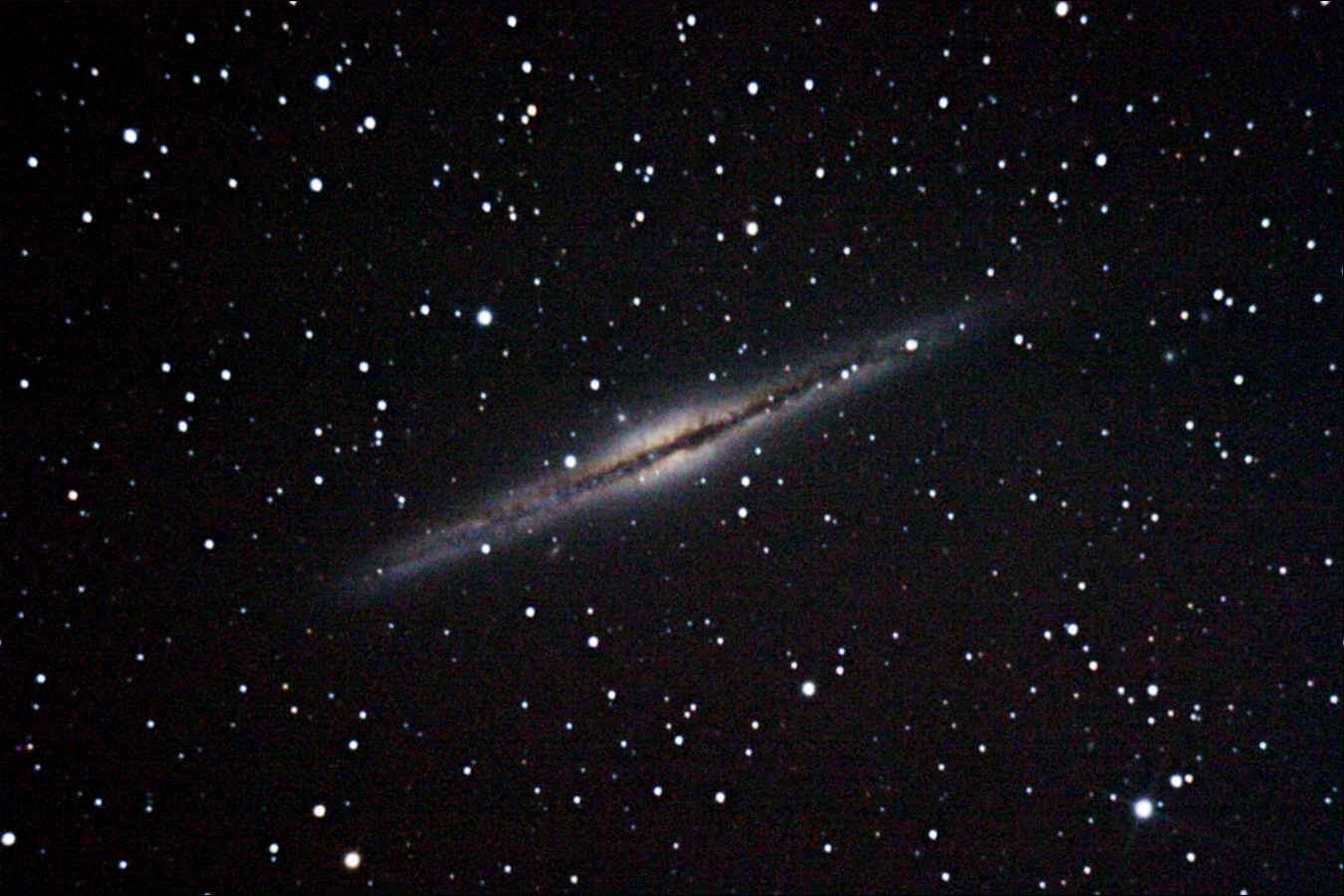
NGC 891 |

M27 |
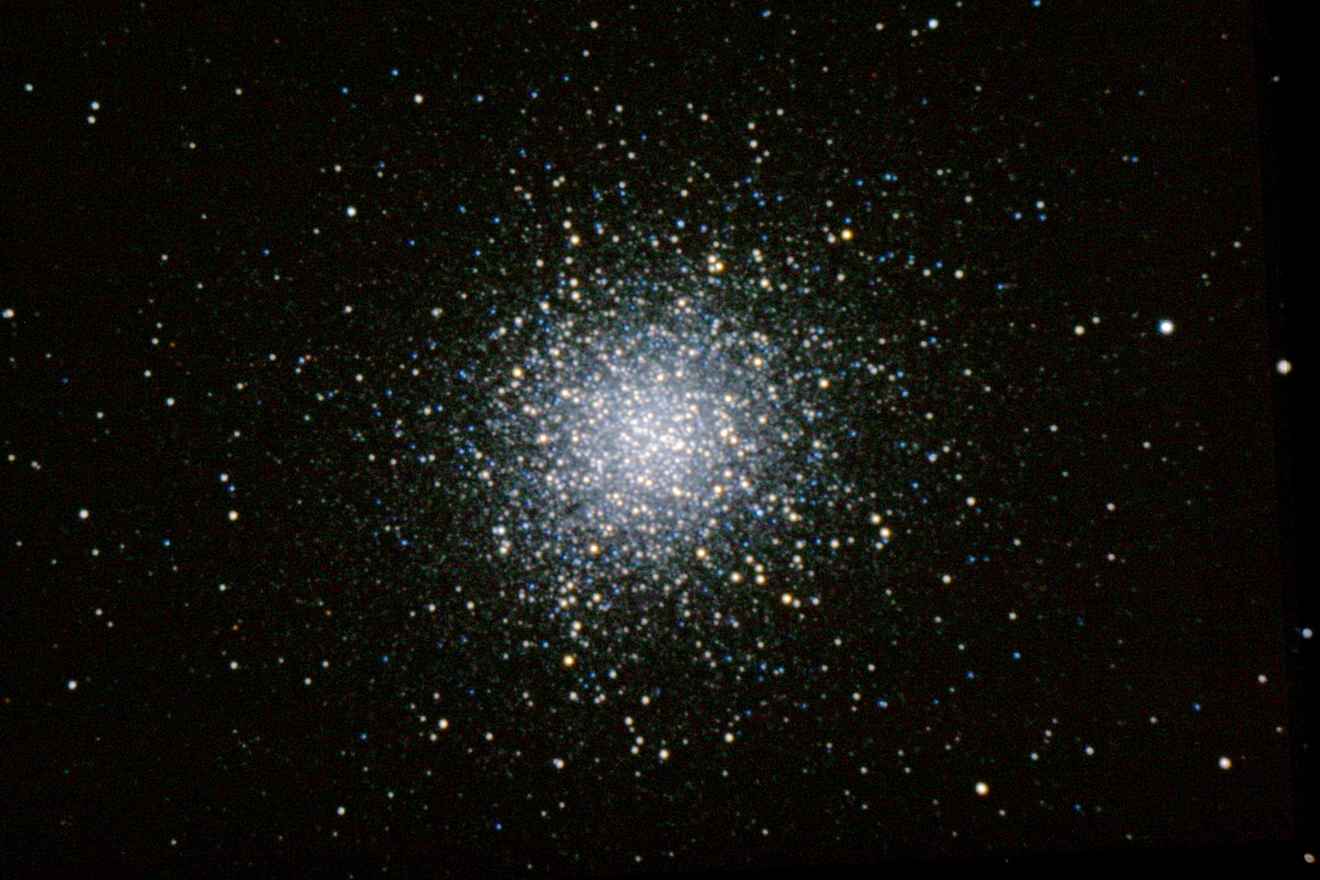
M13 |
|
Click
Images To Enlarge
|
All
three of these images were taken by Bob Brunck through a
25" f/5 Obsession with a 4.0" diagonal on a Dual-axis
Aluminum Platform. All were guided manually with an 8"
f/4 scope, using a 10 mm illuminated reticle eyepiece and
a 2x barlow. All were taken with a standard Canon EOS 10D
with a minus violet filter, without a Coma corrector, all
with ISO 800. M13 is the combination of 2 x 10 sec, 2 x
30 sec, and 3 x 60 sec exposures. NGC 891 was the average
of 1 x 120 sec and 3 x 180 sec exposures. M27 is 3 x 120
sec. Images were combined and enhanced with ImagesPlus and
ACDSee7.

Jupiter
- Moon occultation.
Taken by Becky Coretti with Bill Williams, using a 15"
Obsession and a Tom O Compact Platform. A ToUCam
was used with a TeleVue 4x Powermate.

Total Eclipse of the Moon on October 27, 2004.
This image was taken by Gary Meehan with a 12.5" Dobsonian
on an Equatorial Platform. Gary says, "This was about
a 6 second exposure using a Canon PowerShot A70 and a 40mm
Tele Vue Plossl. There's no way I could have made this shot
without such a terrific product!"
Jupiter
taken through a 15" Obsession on a Compact Platform by
Becky Coretti and Bill Williams at 1:15 AM EST on Feb. 7,2004.
They used a Phillips ToUcam Pro 240K. The images were combined
with Registax and processed in Photoshop by Tony Hallas. Here
are Becky's comments: "Ganymede
has detail!! Woohoo! The shadow of Ganymede is seen to it's
immediate left. The shadow below Ganymede's is not a shadow
at all - rather it is Callisto, whose dark features make it
appear as if there are two shadow transits! Kinda cool, huh?
Thank you so much for your excellent workmanship. The platform
is beautiful and exceedingly functional!"

Comet
Linear c/2002 T7. This is a combination of 20 - 30 second
exposures taken by Doug Askew through an 18" Obsession
Telescope riding on a Dual-axis Aluminum Equatorial Platform.
Doug used an SBIG ST-5c to autoguide the exposures.

M76.
This is a combination of 9 - 60 second exposures, taken with
the same equipment as used for the Comet Linear image.

Saturn
imaged with a Philips ToUcam using a 15" Obsession on
a Compact Equatorial Platform. Photo by Becky Coretti and
Bill Williams.

Mars imaged with
a Philips ToUcam using a 15" Obsession on a Compact Equatorial
Platform. Photo by Becky Coretti and Bill Williams

A
movie of Mars rotating, taken by Robert Schulz in Vienna, Austria.
Click to download the image. Warning: It is a large file. Mr.
Schulz used a 12.5" Portaball Telescope on a Dual-axis
Equatorial Platform. Here are his comments:
"Your platform is excellent. The frame of the webcam is
only 40arcsec wide, and tracking must be perfect to obtain such
results. With the two axis fine correction, centering of a planet
is a snap. Thank you for this beautiful, technical, and precise
platform...it is as important as the optic itself!"
|
|
|
|
|
NGC
4298
|
NGC
4565
|
NGC
4725
|
|
|
|
|
|
M91
|
M88
|
NGC
4244
|
|
|
|
|
| M51 |
|
M10 |
|
CCD
images by Doug Askew with an 18" Obsession on a Dual-axis
Aluminum Platform. All are multiple UNGUIDED exposures
taken with a Starlight HX9 camera. (Click image for a
larger view.)
|
taken
by Doug Askew with an 18" Obsession on a Dual-axis Aluminum
Platform. The image is a combination of 20 10sec unguided exposures
taken with a Starlight HX9 CCD camera."
The Helix Nebula. One hour exposure on Kodak Multispeed
Ektapress at prime focus of 12.5" f/5 with coma corrector and
ST-4 autoguider. Photo by Del Johnson
M42 - Photo by Del Johnson. 45 minute exposure using Fuji
ISO 100 Superia print film. 12.5" f/5 prime focus with Lumicon
coma corrector and ST-4 autoguider, off-axis.
Leonids streaking through Orion. Photo taken with an Olympus
50mm lens at f2.8, piggy-backed onto a Dob on a Platform. Exposure
was 10 minutes unguided, using Fuji 400 print film. Picture
by Tom Osypowski. Image scanning and processing by Hallas Digital
Services.
M42 -- the Orion Nebula. This image is a digital composite
of two negatives taken on Ektar 1000 print film. Exposure of
each negative was 7 minutes. The telescope was a 16" f5 Dob
on a Dual-axis Equatorial Platform. Guiding was done with the
Platform's hand control through a separate guide scope. Images
by Tom Osypowski. Scanning and image processing by Tony and
Daphne Hallas at Astro Photo.
M65, M66 and NGC 3628 in Leo by Del Johnson. Prime focus
of 12.5" f/5 reflector using the Lumicon Coma Corrector. Summation
of three separate one hour exposures on Kodak 35mm Multispeed
Ektapress print film, autoguided with ST-4 CCD. Negatives scanned
and digitally stacked by Astro Photo.
Horsehead Nebula: 60 minute exposure at prime focus of a
12.5" f/5 reflector with a Lumicon coma corrector, Kodak PJM
Ektapress Multispeed film. Guided with an ST-4.
M13: a 10 minute exposure through a 16" f5 Dobsonian on
a Dual-Axis Equatorial Platform, Ektar 1000 film. Image taken
by Tom Osypowski. Image scanned and digitally processed by Jim
Eiselt.
|




-2c.jpg)


.jpg)


.jpg)
.jpg)
.1.jpg)










%20-%2020%20SECOND%20FRAMES%20(30%20OR%20EACH%20FILTER).jpg)